The best brand behaviours aren't invented. They're discovered.

What if the thing that makes your business genuinely different is something you're already doing, but haven't recognised as a competitive advantage?
When businesses think about building a brand, the conversation usually starts with what they want to become.
How do we want to be perceived? What should we stand for? What values should define us?
They're important questions. But at Push Studio, we believe there's another place worth looking first.
At what a business already does.
Because some of the most powerful brand characteristics aren't created in a strategy workshop. They're already embedded in the organisation. In the way people think, solve problems, make decisions and work with customers.
The challenge is recognising them, understanding their value and bringing them to the surface.
That's where brand behaviours come in.
Your brand is already behaving. The question is how.
Every business has its own way of doing things.
Some are naturally collaborative. Others are relentless problem-solvers. Some challenge convention, while others have an extraordinary ability to make complex situations feel simple.
These characteristics often develop organically over time.
They're shaped by founders, leadership teams, shared experiences and the small decisions people make every day.
Eventually, they become part of the business's culture. So familiar that the people inside often stop noticing them.
But customers do.
They experience these behaviours in conversations, recommendations, relationships and outcomes.
And often, they're the very reason customers choose one business over another.
The interesting thing about a genuine competitive advantage is that the business itself isn't always aware it has one.
Why we start by listening.
At Push Studio, interviewing our clients and their customers is a non-negotiable part of our brand strategy process.
We want to understand much more than what a business does or where it wants to go.
We want to discover how it thinks.
How does the team approach a challenge? What happens when a customer has a problem? What do people consistently go above and beyond to achieve? What makes their approach different from everyone else's?
And importantly, do customers recognise those same qualities?
We speak with leadership teams, employees and customers to uncover patterns that might otherwise go unnoticed.
Sometimes the most revealing insights come from the smallest observations.
A particular way of approaching a problem. A question someone always asks. A habit shared across the team.
Individually, these things might seem insignificant.
Together, they can reveal something fundamental about what makes a business different.
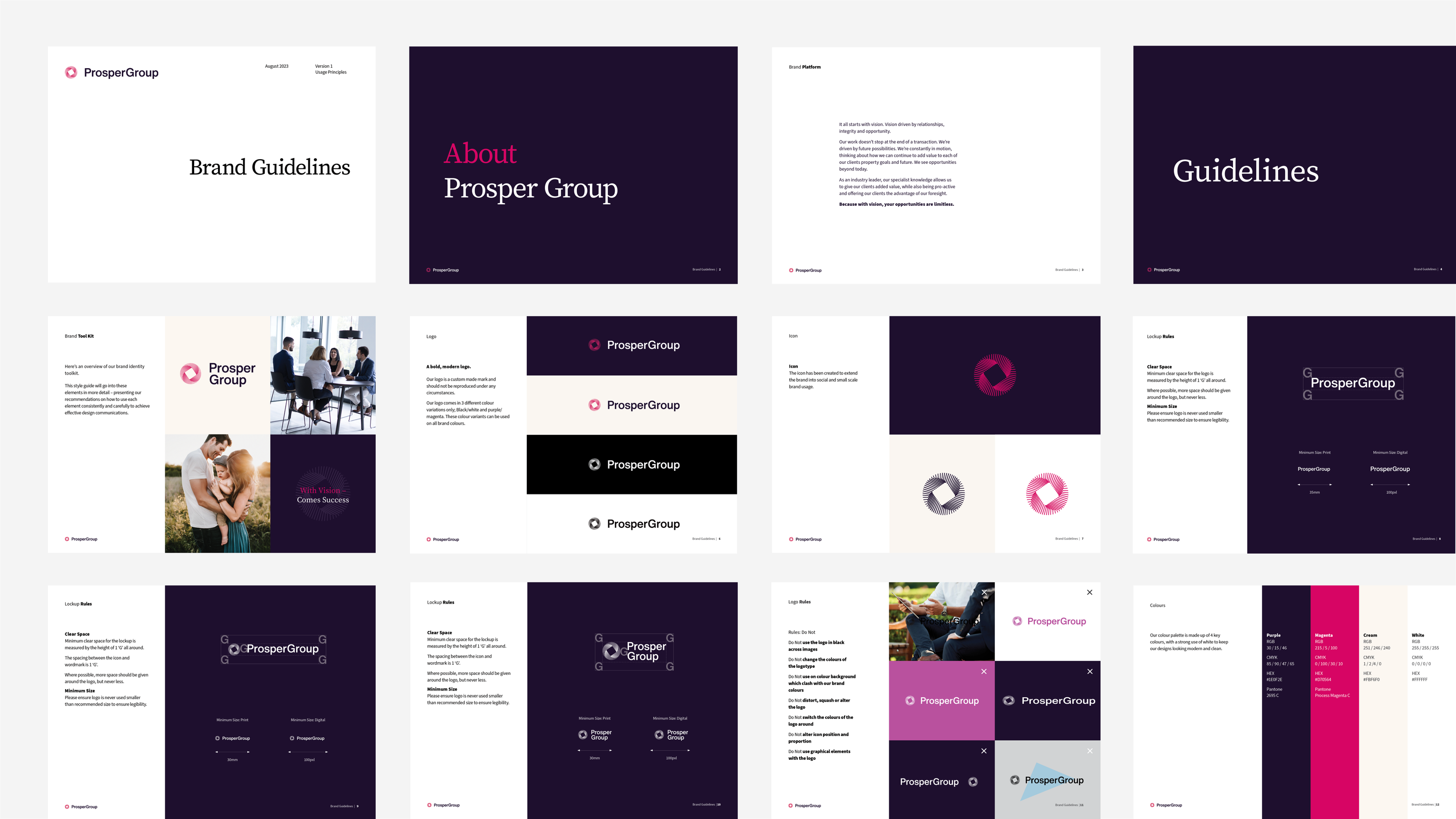
Finding Prosper's difference.
When we began working with Prosper Group, a property advisory and buyers agency business, our brief was to help reposition the brand and communicate the breadth of its expertise.
Prosper operated across residential and commercial property, property management and strategic advisory.
Like many established businesses, its capabilities had evolved, but the brand needed a clearer way to express the value it delivered.
We began with interviews.
Speaking with the team and their clients, we explored how Prosper approached its work, what customers valued and what made the business different.
A consistent pattern began to emerge.
Prosper was an unusually thoughtful and analytical business.
The team didn't simply respond to opportunities presented to them. They explored situations from different angles, questioned assumptions, considered possibilities and worked collaboratively to find the right path forward.
There was a genuine culture of investigation.
A natural curiosity about what could be achieved.
And a shared commitment to understanding not just what customers wanted today, but what they were ultimately working towards.
These weren't behaviours created for a new brand.
They were already happening.
What Prosper needed wasn't a new personality. It needed a clearer understanding of the one it already had.
Turning behaviour into a brand position.
The more we explored these behaviours, the clearer the opportunity became.
Prosper's value wasn't simply in helping customers buy, sell or manage property.
It was in the thinking that happened before those decisions.
The analysis. The exploration. The ability to identify opportunities and help customers make informed decisions about their future.
The team had a vision for what was possible, and their role was to help customers realise their own.
That understanding became the foundation of a new brand position:
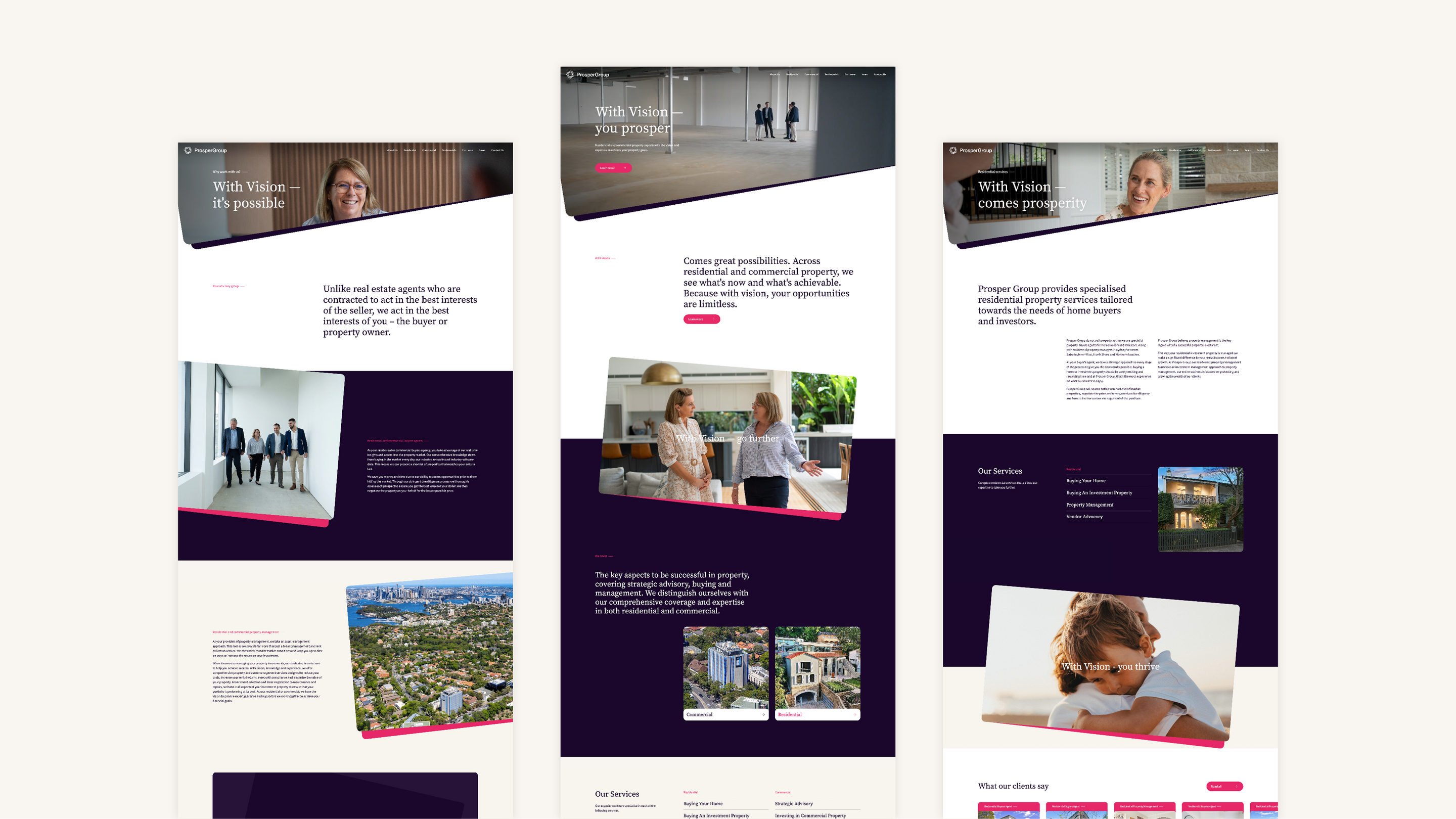
With Vision, you prosper.
It was a simple idea with genuine depth.
It connected the ambitions of Prosper's customers with the analytical thinking and forward-looking approach of its people.
And because the positioning was rooted in existing behaviours, it felt authentic.
We weren't asking the business to become something different.
We were giving it a clearer way to understand and communicate what made it valuable.
That strategic thinking then informed the visual identity, messaging, website and wider brand experience.
But the impact went further than the creative work.
When brand strategy starts changing the business.
One of the most valuable outcomes of the Prosper project happened internally.
Once we'd identified and articulated these behaviours, the team could see them more clearly.
What had previously been an instinctive way of working became something they could consciously develop.
Their collaborative approach to analysis and exploration was no longer simply part of the culture. It was a recognised strength.
Something worth protecting, encouraging and building upon.
This created an opportunity to establish stronger internal rituals around discovery, shared thinking and identifying opportunities for customers.
It also began influencing recruitment.
Rather than hiring solely for experience and technical capability, Prosper could consider whether prospective employees shared the curiosity, analytical mindset and collaborative approach that made the business distinctive.
The brand strategy had become more than a communications platform.
It was helping guide how the organisation developed.
That's when branding becomes particularly powerful. When it doesn't just change how a business is perceived, but strengthens the way the business operates.
From brand values to everyday behaviours.
Most businesses have a list of values.
Integrity. Innovation. Excellence. Collaboration.
But values can become meaningless when they're disconnected from everyday actions.
What does innovation actually look like in your business?
How does collaboration change the way you work?
What does customer focus mean when a difficult decision needs to be made?
Brand behaviours make these ideas tangible.
They turn broad statements into practical principles that guide decisions, relationships and experiences.
For a business like Prosper, a behaviour might be expressed as:
We explore every opportunity before recommending a direction.
Or:
We look beyond the immediate transaction to understand the bigger ambition.
These aren't proposed as Prosper's formal rules, but they illustrate how a strategic position can translate into meaningful everyday actions.
And when those behaviours are reinforced through leadership, team rituals, customer experiences and recruitment, they become increasingly embedded in the organisation.
The brand becomes something people actively deliver, rather than something they simply communicate.
Your people are your most important brand touchpoint.
Legendary creative director Lee Clow believed that everything a brand does contributes to how people feel about it.
It's a philosophy we strongly agree with.
A brand isn't simply its logo, website or advertising.
It's the sum of every experience someone has with the business.
And in professional services, where relationships, expertise and trust play such an important role, the behaviour of your people is often the most influential part of that experience.
Your customers might first encounter your brand through a website.
But their lasting impression is shaped by what happens next.
How your team listens. How they approach challenges. How they communicate. How they respond when things don't go to plan.
These moments either reinforce your brand promise or undermine it.
That's why understanding and defining brand behaviours matters.
They help ensure the experience customers have is consistent with the story the business tells.
Don't invent your difference. Discover it.
There's a temptation in branding to focus on creating something new.
A new story. A new identity. A new set of values.
But sometimes the most valuable work is uncovering what's already there.
The behaviours that have helped a business succeed. The instincts that guide its best decisions. The qualities customers recognise but the organisation has never properly articulated.
Once those things are understood, they can become the foundation for something much bigger.
A clearer market position. A more distinctive identity. A stronger culture. Better customer experiences. And a more deliberate approach to building the business.
For Prosper, the process revealed a culture of analysis, exploration and forward thinking that became central to its positioning and internal development.
And that's what we believe great brand strategy should do.
It shouldn't just give your business something different to say. It should help you understand what makes you different, and give you the tools to become even better at it.
A little different. By Design.
At Push Studio, we uncover what makes businesses genuinely different through research, conversations and strategic thinking.
Then we turn those insights into distinctive brands, meaningful experiences and a competitive advantage that starts from within.